
Blower Door Testing for Homes & Businesses in Southeast Idaho
Pinpoint energy loss and make targeted improvements with expert testing.
Professional Blower Door Testing by Experienced Experts
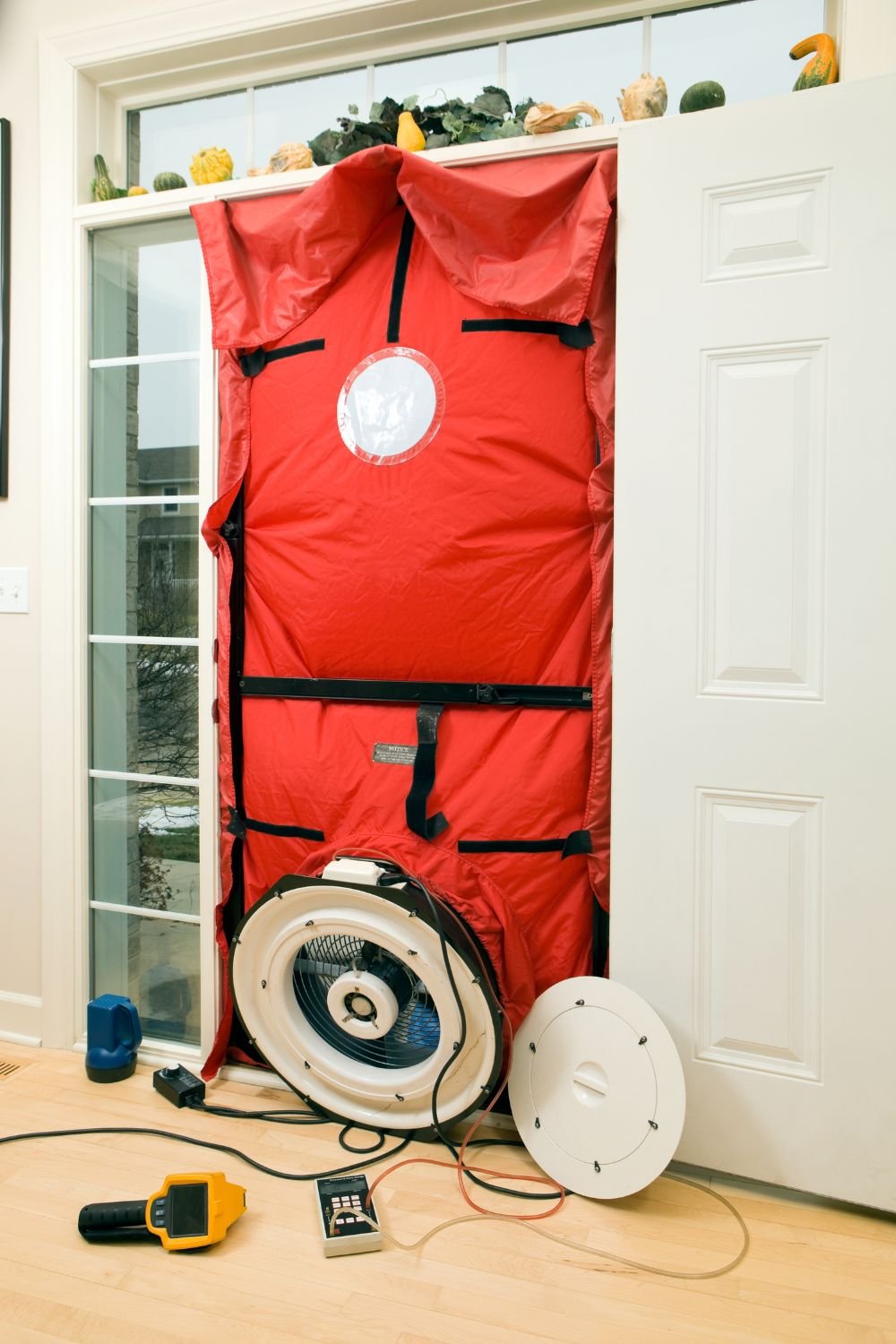
A blower door test measures how airtight your home is. We mount a calibrated fan in an exterior doorway, depressurize the house to a standardized pressure, and measure exactly how much air leaks in through gaps, cracks, and penetrations in your building envelope.
The result is a precise number — expressed in CFM50 or ACH50 — that tells you how leaky or tight your home is compared to building standards. For homeowners in Southeast Idaho dealing with high heating bills, drafty rooms, or comfort issues, this test pinpoints the problem and quantifies it so you know exactly where you stand.
What's included:
Installation and calibration of a blower door fan system in your home's primary exterior doorframe
Guided walkthrough to identify the specific locations where air is entering or escaping
Whole-house air leakage measurement under standardized depressurization (50 Pascals)
Detailed results report with your home's leakage rate and comparison to current energy code standards
Our Process
We follow a rigorous process to ensure your blower door test is installed correctly and performs as expected.
Prepare
We close all windows and exterior doors, open interior doors, and set your home to testing conditions.
Pressurize
We mount the blower door fan and depressurize the home to a standardized 50 Pascals.
Locate
We walk the home identifying specific leak points at penetrations, joints, and envelope gaps.
Calculate
We record your leakage rate and provide a clear report with actionable findings.
The Long-Term Benefits
Blow-in insulation not only improves comfort but also reduces energy bills and HVAC strain. Homes maintain even temperatures year-round, and insulation lasts decades without settling or losing effectiveness.
Gives you a measurable baseline of your home's air leakage
Satisfies testing requirements for energy efficiency programs
Identifies hidden draft sources that drive up heating costs
Common Questions
Everything you need to know about Blower Door Testing
What does the blower door number actually mean?
The number — usually expressed as CFM50 — tells you how many cubic feet of air leak through your home’s envelope every minute when we depressurize it to 50 Pascals. A lower number means a tighter home. We also convert this to ACH50 (air changes per hour), which accounts for your home’s volume and makes it easier to compare against building code thresholds.
Is a tighter home always better?
Not without proper ventilation. A home that’s too tight without mechanical ventilation can trap moisture, indoor pollutants, and stale air. The goal is to seal the envelope and then control your air exchange intentionally with ventilation equipment, rather than relying on random leaks. We’ll tell you if your home needs ventilation improvements alongside air sealing.
When should I get a blower door test?
Before and after any air sealing or insulation work — the “before” gives you a baseline, and the “after” proves the work made a measurable difference. It’s also required for new construction code compliance in Idaho and for participation in many utility rebate programs. If you’re dealing with high energy bills or rooms that are hard to keep comfortable, it’s a logical first step.
Will the test damage my home?
No. The pressure differential we create is equivalent to a 20 mph wind — well within what your home experiences during normal weather in Southeast Idaho. The fan mounts temporarily in the doorframe with an adjustable panel and is removed as soon as testing is complete.
How does this relate to the other services you offer?
Blower door testing is often the starting point. It tells us how leaky your home is and where. From there, we can recommend targeted solutions — attic baffles, air sealing, insulation upgrades — and retest afterward to prove the improvement. It’s also paired with combustion appliance testing whenever we’re tightening a home, because reducing air leakage can affect how your gas appliances draft.